- Like
- Digg
- Del
- Tumblr
- VKontakte
- Buffer
- Love This
- Odnoklassniki
- Meneame
- Blogger
- Amazon
- Yahoo Mail
- Gmail
- AOL
- Newsvine
- HackerNews
- Evernote
- MySpace
- Mail.ru
- Viadeo
- Line
- Comments
- Yummly
- SMS
- Viber
- Telegram
- Subscribe
- Skype
- Facebook Messenger
- Kakao
- LiveJournal
- Yammer
- Edgar
- Fintel
- Mix
- Instapaper
- Copy Link
Purpose:
To work on a defensive back’s (DB) ability to mirror a receiver’s route and stay in phase.
Setup:
Players pair off with a teammate and form a line, with the first pair stepping up onto the line of scrimmage (LOS), with the DB in trail technique right behind the receiver.
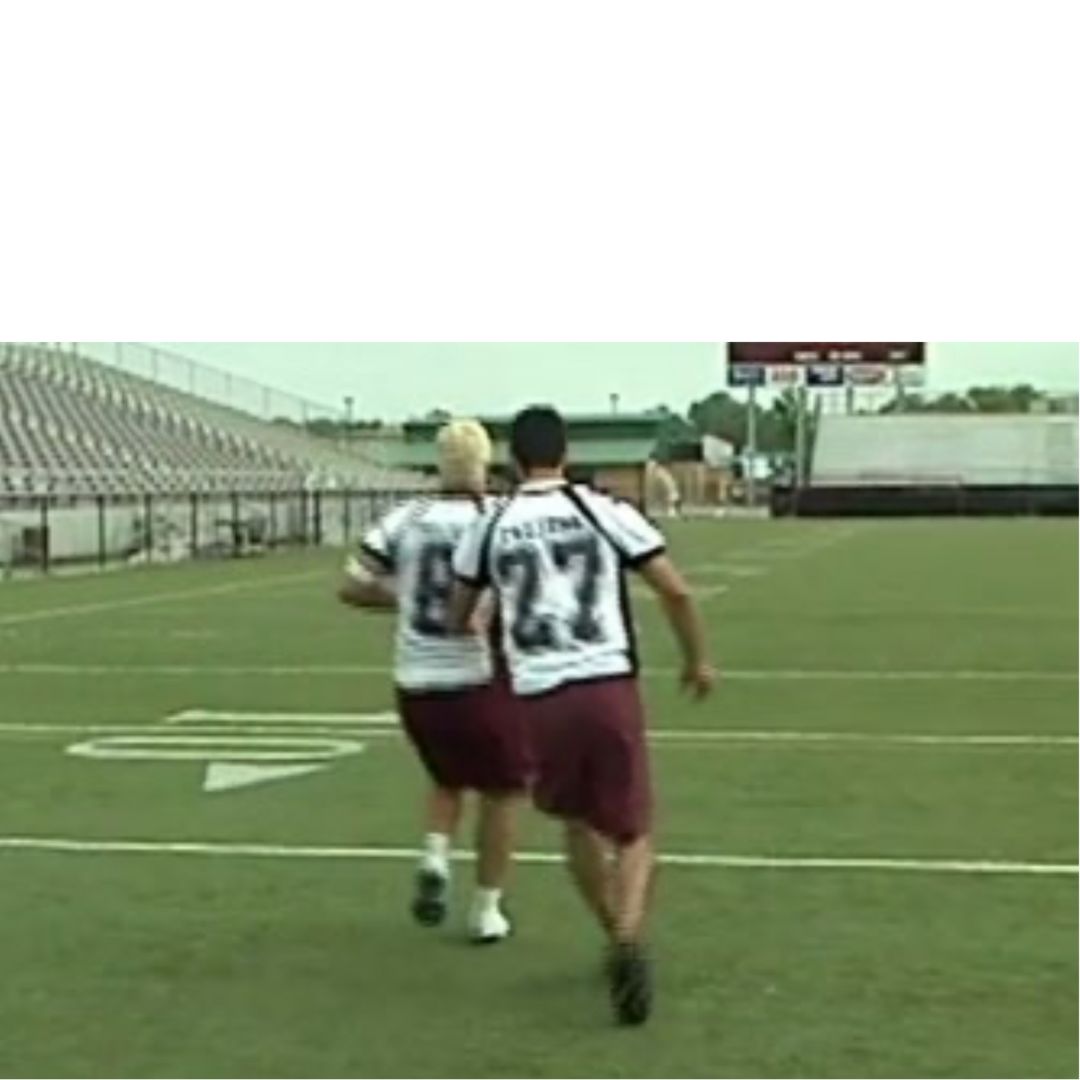
phase as they run their route.
Instructions:
- On the coach’s signal, the receiver begins to sprint downfield, cycling through a series of predetermined routes.
- The DB stays close to the receiver, mirroring the routes as they run downfield and staying in phase, maintaining contact with the receiver throughout the drill if possible.Begin at 50% speed for the first few reps to allow players to get comfortable with the footwork before moving on to the full-speed version of the drill.
Coaching Tips:
- Work on about 3 routes per rep, typically starting with a quick out, a post, and a corner route. This variety ensures DBs are comfortable reacting to the receiver and staying in phase in different directions.
- Emphasize the importance of staying close to the receiver and underneath the route, positioning between the receiver and the quarterback. Football is a game of inches, particularly for defensive backs, where a few inches can mean the difference between an excellent defensive play and a mistake.
Tips for Younger Athletes:
- Focus on basic stance and balance: Young players should work on maintaining a balanced stance, ensuring they are neither too high nor too low in their backpedal and transitions.
- Practice head positioning: Coaches should emphasize keeping the head up and eyes on the receiver’s hips, as young players often tend to watch the feet or the ball.
- Develop reaction speed: Use drills that help younger athletes improve their reaction time to the receiver’s movements, enhancing their ability to stay in phase effectively.
Tips for Older Athletes:
- Refine the backpedal technique: Older, more experienced players should focus on refining their backpedal, making it smooth and efficient while maintaining speed.
- Work on transition fluidity: Emphasize the importance of fluid hip turns and transitions when changing direction, crucial for staying in phase with the receiver.
- Incorporate advanced route recognition: Challenge older players to recognize route patterns and anticipate receiver movements, improving their ability to mirror and stay in phase without relying solely on physical reaction.
- Like
- Digg
- Del
- Tumblr
- VKontakte
- Buffer
- Love This
- Odnoklassniki
- Meneame
- Blogger
- Amazon
- Yahoo Mail
- Gmail
- AOL
- Newsvine
- HackerNews
- Evernote
- MySpace
- Mail.ru
- Viadeo
- Line
- Comments
- Yummly
- SMS
- Viber
- Telegram
- Subscribe
- Skype
- Facebook Messenger
- Kakao
- LiveJournal
- Yammer
- Edgar
- Fintel
- Mix
- Instapaper
- Copy Link